🐝 Dammer bees, commonly known as stingless bees, belong to the group Meliponini. In India, one of the most common species is Tetragonula iridipennis (earlier known as Trigona iridipennis).
These are small, non-stinging bees found in tropical and subtropical regions. Unlike regular honey bees, they do not sting, making them safe and easy to work with.
These bees have been part of traditional ecological systems for generations and are closely connected to forest-based communities.
They naturally build their nests in:
- Tree hollows
- Wall crevices
- Underground cavities
- Wooden or bamboo boxes (in managed beekeeping)
Dammer bees produce a special type of honey that is valued not only for its taste but also for its medicinal properties.
🌿 Why Dammer Bees are Important for the Environment
Dammer bees are not just honey producers—they are essential for maintaining ecological balance.
🌼 1. Powerful Pollinators
Dammer bees play a crucial role in pollination.
They help in:
- Flower reproduction
- Fruit and seed formation
- Maintaining biodiversity
Their small size allows them to pollinate even delicate flowers that larger bees cannot.
🌱 2. Support for Biodiversity
By pollinating a wide range of plants, dammer bees help sustain forests and natural vegetation.
This supports:
- Wildlife food chains
- Plant diversity
- Ecosystem stability
🌍 3. Indicator of a Healthy Environment
Dammer bees thrive in clean and undisturbed ecosystems.
Their presence indicates:
- Good environmental health
- Low pollution levels
- Balanced natural systems
🌟 Importance for Livelihood
Dammer bee farming is emerging as a sustainable livelihood option, especially for rural and tribal communities.
💰 1. High-Value Honey
The honey produced by dammer bees:
- Has medicinal value
- Is rich in antioxidants
- Is sold at a higher price than regular honey
👨🌾 2. Low Investment, High Potential
- Requires minimal space
- Low maintenance
- Can be done alongside farming
This makes it ideal for small-scale farmers.
Since dammer bees do not sting:
- Safe for women and elderly
- Suitable for community-based initiatives
- Easy to manage at household level
🍯 Unique Characteristics of Dammer Bee Honey
Dammer bee honey is different from regular honey in many ways:
- More liquid in texture
- Slightly sour and tangy taste
- Strong medicinal properties
- Used in traditional healing practices
It is often used for:
- Boosting immunity
- Treating throat infections
- Wound healing
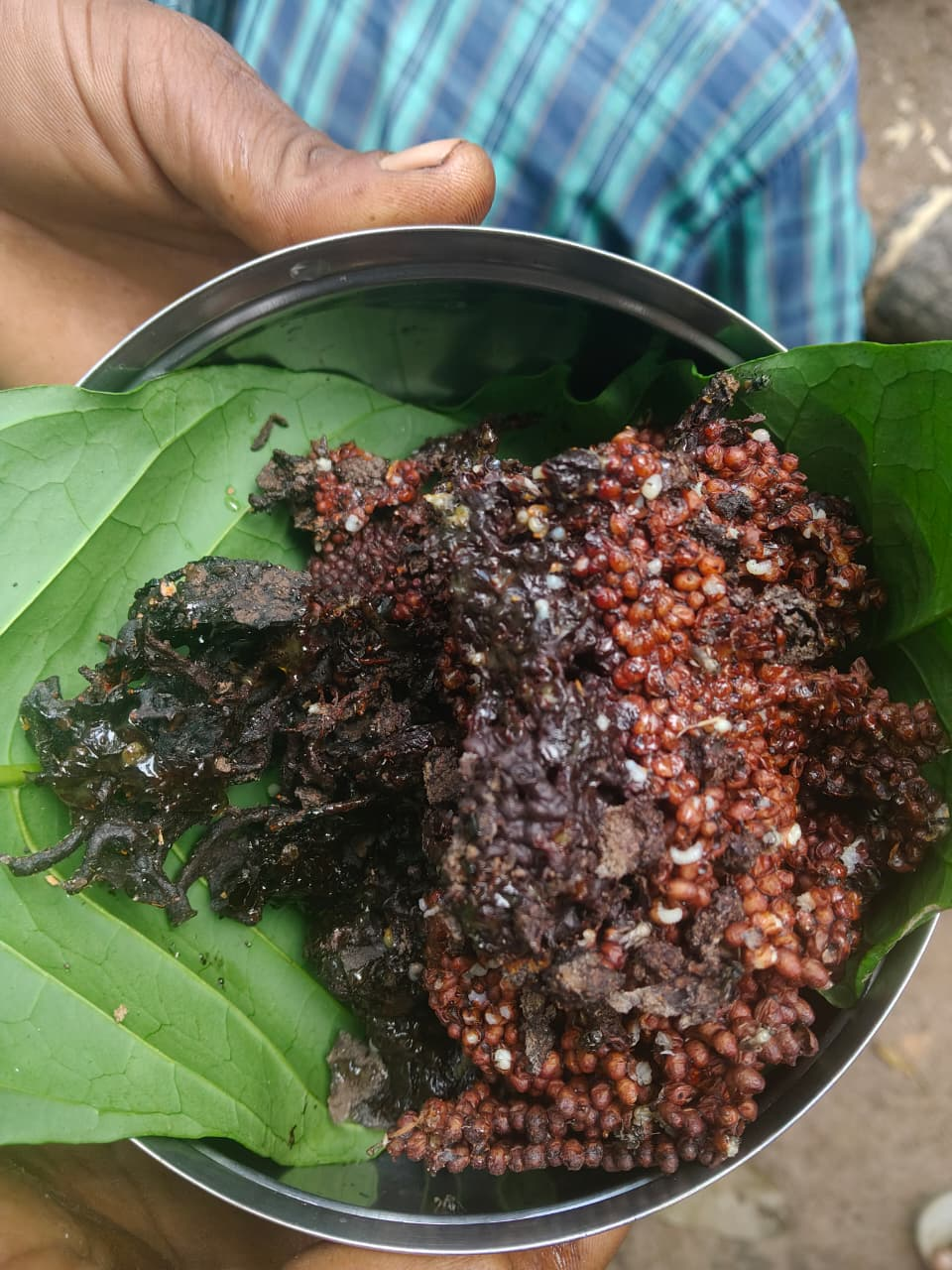 Dammer bee colony structure with brood and honey pots
🔄 Sustainable Beekeeping Practice
Dammer bee farming is eco-friendly because:
- It does not harm bees during honey extraction
- It supports natural pollination
- It encourages conservation of local species
This makes it a perfect example of livelihood + conservation working together.
🌄 Conclusion
Dammer bees are small but powerful contributors to both nature and human life.
They help maintain ecological balance, support agriculture, and provide sustainable income opportunities. In a world facing environmental challenges, working with such natural systems is not just beneficial—it is necessary.
Understanding and promoting dammer bees is a step toward a more sustainable and balanced future.
⚠️ Copyright & Usage Notice
© 2025 Sudeep Bhagat. All Rights Reserved.
🚫 This content is based on field learning and research. Unauthorized copying or reuse without permission is not allowed.
✅ Proper credit is required for reference or sharing.